SBI to Retire mCASH on December 1, 2025: What Customers Need to Know
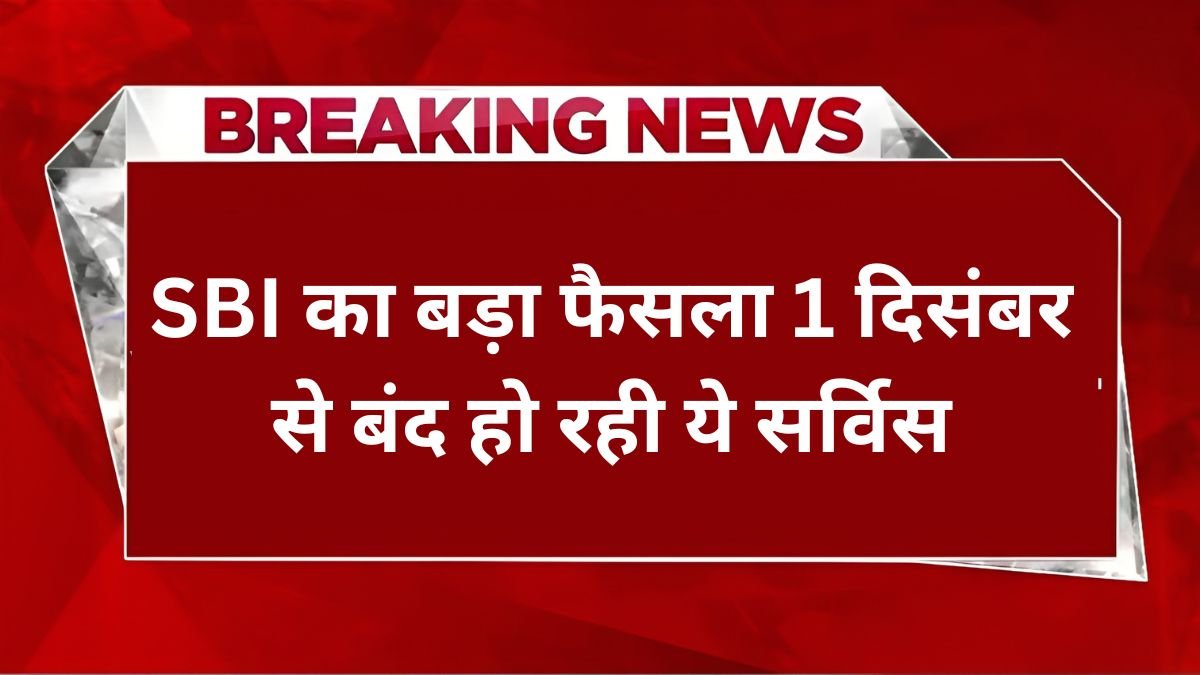
The State Bank of India, or SBI, has actually announced its mCASH service to go bust from December 1, 2025, Making such a change for millions of users who relied on this fast pay facility to shift the streams for mainstream digital money transfer. Below is a handy-to-follow summary on what is changing, its significance, and everything else to make it transition smoothly.
What was mCASH?
mCASH was a payment facilitation option for SBI customers to send and “claim cash” using only mobile number or e-mail without beneficiary registration. A sender creates a secure link and 8-digit passcode and the recipient uses it to claim funds into a bank account. Instant ad hoc transfers might be very useful for example, splitting the bill or sending some cash to friends.
Reasons for discontinuation of mCASH by SBI
SBI says that this is a part of efforts of the bank towards having digital payment systems like faster, safer, and popularly accepted. mCASH functioned on an architecture which was dated for almost all aspects of security features and certainly lower interoperability. Hence, shutting down the service would mean that SBI will push customers to more standard channels such as UPI, IMPS, NEFT, and RTGS, which are more secure and in most cases offer instant settlements and widespread acceptance.
What changes for customers?
- All mCASH links and claims will cease to work on 30 November 2025, after which the links will go dead: recipients cannot claim funds via those links once mCASH service is discontinued.
- Customers who would use it for informal transfers must choose UPI and bank transfers, rather than using mCASH anymore.
- Updating apps and learning UPI/IMPS workflows is what SBI advised users to adopt to pre-empt disruption.
Recommended alternatives
- UPI (BHIM SBI Pay, Google Pay, PhonePe, etc.) — best for instant peer-to-peer transfers using Virtual Payment Address (VPA) or QR codes. No beneficiary setup needed for many use cases and widely accepted.
- IMPS — real-time transfers since 24/7 account number+IFSC; useful when UPI is unavailable.
- NEFT/RTGS — preferred for larger amounts; NEFT settles in batches while RTGS is real-time for high-value transfers.
- Account-to-account transfers using mobile banking — register beneficiaries for recurring or larger payments.
How to send money via UPI (quick steps)
Open your UPI app (e.g., BHIM SBI Pay).
Tap Pay and choose VPA, account number+IFSC, or scan QR.
Enter amount and select debit account.
Authenticate with your UPI PIN to complete the transfer.
Practical tips for a smooth transition
So that alerts and transfers work properly, update contact and KYC details in your SBI app.
Ensure that recipient name spelling, account number, and IFSC match records at the bank to avoid failed transactions.
Register frequent payees in your beneficiary list to make NEFT/RTGS easy.
Learn basic app features: QR scanning, request money, transaction history and refund procedures.
Be careful of scams: SBI will never ask for UPI PINs or OTPs. Ignore unsolicited links or calls asking for personal banking details.
If you face issues
In case of transfer failure or if any specific query arises regarding service retirement, reach out to SBI customer care at the earliest or visit your branch. Maintain transaction references and screenshots to hasten the resolution process.
Bottom line
Retiring mCASH by the SBI shifts to a digitally, more secure, and interoperable payment model. Although some customers would need to adjust themselves, UPI, IMPS, NEFT, and RTGS provide safer, swifter transactions with money. Prepare now by updating apps, verifying details, and learning one or two alternate methods so your everyday banking remains seamless after 1 December 2025.